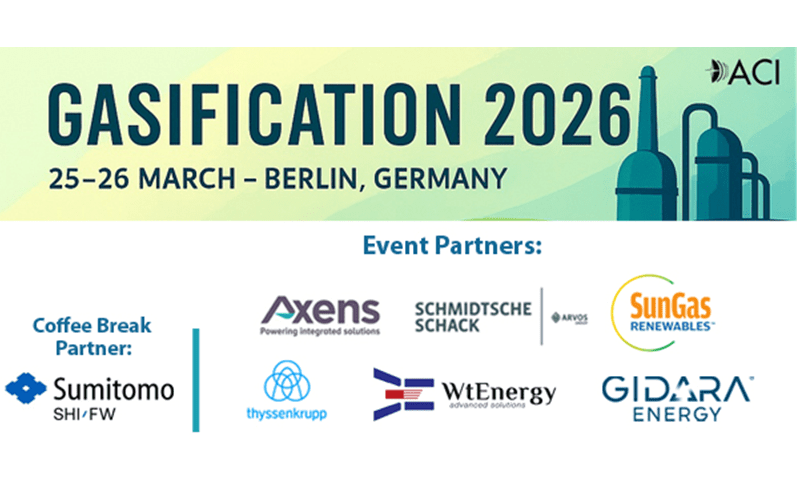
The global gasification industry is entering a defining phase as the world intensifies efforts to decarbonise heavy industry, manage waste sustainably, and secure reliable energy supply. Once considered a niche conversion technology, gasification has re-emerged as a critical enabler in producing low-carbon hydrogen, sustainable fuels, and renewable feedstocks for industry.
Market Landscape:
The market is forecast to expand at a steady mid-to-high single-digit CAGR through the decade, driven by the twin imperatives of energy transition and circular economy goals.
• Asia continues to dominate with large-scale industrial and coal-to-syngas projects, backed by government incentives and domestic feedstock availability.
• In Europe and North America, momentum is shifting toward biomass and waste gasification, underpinned by net-zero targets, carbon pricing mechanisms, and renewable fuel mandates.
Gasification’s strength lies in its versatility—it can process coal, biomass, or municipal solid waste into syngas, which serves as a building block for hydrogen, power generation, and advanced fuels. However, despite its proven technical foundation, commercial deployment remains limited by cost and policy constraints.
Key Challenges and Investment Considerations:
Operators and investors face a complex set of challenges as the technology scales up:
• Capital Intensity & Risk – Full-system integration, including gas clean-up and carbon capture, makes projects expensive and high-risk without government-backed financing or guarantees.
• Policy & Offtake Certainty – The absence of stable carbon pricing and long-term hydrogen or e-fuel contracts makes achieving bankability difficult.
• Carbon & Sustainability Standards – Ensuring genuine low or negative emissions requires robust CCUS integration and transparent certification frameworks.
• Market Competition – Rapid cost declines in renewables and electrolysis are reshaping the economics of hydrogen production, demanding sharper competitiveness from gasification projects.
• Feedstock Supply Chain – Variability, logistics, and sustainability of biomass or waste feedstock remain significant operational hurdles.
• Public Acceptance & Permitting – Coal-based projects face environmental opposition, and even waste-to-energy plants must meet stringent sustainability expectations.
• Technology Reliability – Proven track records and scalable, modular designs are critical to attract institutional investment.
Despite these barriers, the opportunity is real. Integration with industrial clusters and hydrogen hubs, combined with supportive policies and carbon credit mechanisms, can dramatically enhance project viability. The next wave of investment will likely centre on bio- and waste-gasification linked with hydrogen and CCUS—delivering both decarbonisation and resource recovery.
Gasification is at the intersection of energy security, waste management, and decarbonisation. As nations seek scalable pathways to net zero, it offers a vital bridge technology—turning low-value feedstocks into high-value, low-carbon energy carriers.
To stay ahead of the curve and engage directly with the leaders shaping this evolving market, there is no better opportunity than to gather in person at Gasification 2026 Summit.
Join us at Gasification 2026 on the 25th & 26th March in Berlin and become an integral part of the collective journey towards a cleaner, more resilient, and truly sustainable energy future for all.
Save £350 with Early Bird Registration
Offer Ends 31st October 2025!
Reduced Rate: £1,645
Standard Rate: £1,995
Or for any assistance & invoice registration, email: Mohammad Ahsan via email on +44 203 141 0606
Or contact Mohammad Ahsan via email or call +44 (0) 203 141 0606
The event will comprise two days of formal presentations, interactive roundtable discussions and excellent networking opportunities, providing an ideal setting to convene with your peers to discuss both current operational & future planned gasification plants, end product markets, potential barriers & support policies as well as project economics & finance.